Flat Tire in Winter? When to Change vs When to Call for Help
You’re driving through Oakville on a cold January evening when you hear it—that unmistakable thump-thump-thump of a flat tire. Your car starts pulling to one side, and you realize you need to pull over immediately. But now what?
Should you brave the freezing temperatures and change the tire yourself? Or is it safer to call for professional help? This guide helps you make the right decision based on your situation, safety conditions, and vehicle type. If you need immediate assistance in Oakville, call (289) 430-6172 for fast 24/7 tire change service.
Why Flat Tires Happen More Often in Winter
Winter driving in Oakville creates perfect conditions for flat tires. Understanding why helps you stay prepared and avoid dangerous situations.
1. Cold Weather Reduces Tire Pressure
For every 5°C drop in temperature, your tires lose approximately 1-2 PSI (pounds per square inch) of air pressure. When temperatures in Oakville plummet to -15°C or below, underinflated tires are more vulnerable to punctures, blowouts, and rim damage from potholes.
2. Potholes Multiply After Freeze-Thaw Cycles
Winter’s freeze-thaw cycles create and expand potholes on Oakville roads like Trafalgar, Dundas, and the QEW. Hitting a pothole at speed can puncture your tire, bend your wheel, or damage your sidewall—all requiring immediate attention.
3. Sharp Ice and Road Debris
Ice chunks, salt-covered debris, and hidden metal objects become more common on winter roads. These hazards can slice through tire rubber, causing sudden flats that leave you stranded in dangerous cold.
4. Older Tires Are More Vulnerable
Tires with worn tread or aged rubber are especially susceptible to winter damage. If your tires are over 6 years old or have less than 4/32″ of tread depth, they’re at higher risk of failure during cold weather.
When It’s Safe to Change a Flat Tire Yourself
Changing your own tire can save time and money—but only if conditions are safe. Consider DIY tire changing only when ALL of these conditions are met:
✅ Safe DIY Tire Change Conditions
- Safe Location: You’re in a well-lit parking lot, driveway, or wide shoulder away from traffic.
- Stable Ground: The surface is level, solid, and free of ice or snow that could cause your jack to slip.
- Working Spare: You’ve confirmed your spare tire is properly inflated and in good condition.
- Proper Tools: You have a functioning jack, lug wrench, and wheel chocks or blocks.
- Physical Ability: You’re physically capable of lifting a tire (20-30 lbs) and loosening tight lug nuts in cold weather.
- Reasonable Temperature: Temperatures are above -10°C and you have warm clothing and gloves.
- Good Visibility: It’s daylight or you have adequate lighting to see clearly.
- No Wheel Damage: Your wheel rim is not bent, cracked, or visibly damaged.
If even ONE of these conditions is not met, it’s safer to call professional tire change service. Don’t risk your safety to save a few dollars.
When You Should Call for Professional Help
Many situations make DIY tire changing dangerous or impossible. Call (289) 430-6172 for immediate assistance if any of these apply:
🚨 Call Professional Tire Service If:
- You’re on a busy highway: Changing a tire on the QEW, 403, or other high-speed roads is extremely dangerous.
- Weather is severe: Heavy snow, freezing rain, or temperatures below -10°C make tire changing unsafe.
- You have no spare tire: Many modern vehicles don’t include spare tires—only inflator kits that don’t work for punctures.
- Your spare is flat: A deflated spare is useless and requires professional replacement.
- Lug nuts won’t budge: Rusted, over-torqued, or frozen lug nuts require specialized tools to remove safely.
- The wheel is damaged: Bent or cracked rims need towing to prevent further damage.
- You’re physically unable: If you have injuries, disabilities, or lack the strength to safely change a tire, don’t risk it.
- You’re in an unsafe location: Dark, isolated, or high-crime areas are not worth the risk.
- You’re unsure of the process: If you’ve never changed a tire or feel uncomfortable, professional help is the smart choice.
Our 24/7 tire change service in Oakville reaches most locations within 20-30 minutes. We bring all necessary tools, work safely in any weather, and get you back on the road quickly.
How to Change a Flat Tire Safely in Winter (DIY Guide)
If you’ve confirmed it’s safe to proceed, follow these steps to change your tire safely in cold weather:
Step 1: Find a Safe Location and Turn on Hazards
Pull as far off the road as possible onto level, stable ground. Activate your hazard lights immediately to alert other drivers. Apply your parking brake and turn off your engine.
Step 2: Gather Your Winter Emergency Kit
Before starting, collect essential items:
- Jack and lug wrench
- Spare tire (check pressure first)
- Wheel chocks or large rocks
- Flashlight or headlamp
- Reflective vest or triangle
- Winter gloves and warm clothing
- Waterproof mat or cardboard to kneel on
Step 3: Secure the Vehicle
Place wheel chocks or heavy rocks behind the tires opposite to the flat. This prevents your car from rolling, especially on icy or sloped surfaces.
Step 4: Loosen Lug Nuts (Before Jacking)
Use your lug wrench to loosen—but not remove—the lug nuts while the tire is still on the ground. Turn counterclockwise. If nuts are frozen or stuck, apply penetrating oil and wait a few minutes.
Step 5: Position the Jack Correctly
Consult your owner’s manual for the correct jack point (usually reinforced areas near each wheel). Place the jack on solid, level ground—never on ice or snow. If the ground is soft, place a sturdy board under the jack for stability.
Step 6: Lift the Vehicle
Raise the vehicle until the flat tire is about 6 inches off the ground. Ensure the car is stable before proceeding.
Step 7: Remove Lug Nuts and Flat Tire
Finish unscrewing the lug nuts and set them aside in a safe place (inside a hubcap or your pocket). Pull the flat tire straight toward you to remove it.
Step 8: Mount the Spare Tire
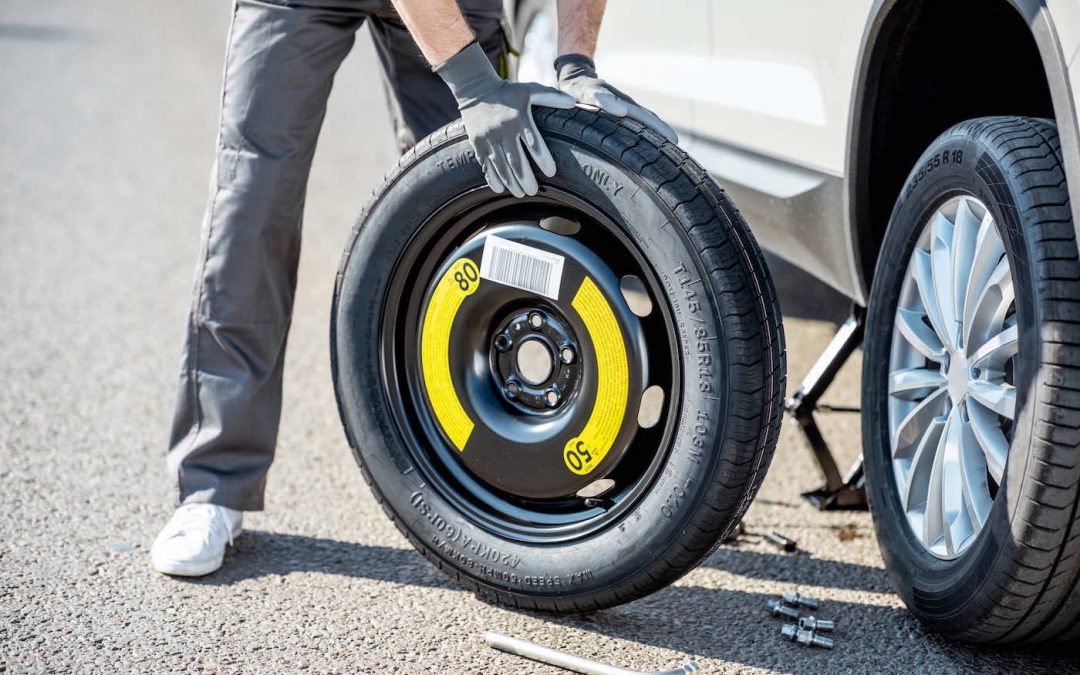
Align the spare tire’s holes with the wheel studs and push it onto the hub. Hand-tighten the lug nuts in a star pattern (opposite sides) to ensure even seating.
Step 9: Lower the Vehicle and Tighten
Lower the jack until the tire touches the ground but doesn’t bear full weight. Tighten the lug nuts firmly in a star pattern. Then lower completely and give each nut a final firm turn.
Step 10: Check Spare Tire Pressure
Most temporary spare tires (donuts) require 60 PSI. Check pressure as soon as possible and inflate if needed. Drive directly to a tire shop to repair or replace your flat.
Important: Temporary spare tires (donuts) are rated for maximum 50 mph and limited distance (usually 50-70 miles). Don’t drive longer than necessary on a spare.
Winter Tire Change Safety Warnings
Even experienced drivers face serious risks changing tires in winter conditions. Be aware of these dangers:
❄️ Cold Weather Hazards
- Hypothermia and Frostbite: Prolonged exposure to freezing temperatures without proper clothing can lead to dangerous cold injuries within 10-20 minutes.
- Reduced Dexterity: Cold hands make it harder to grip tools and handle small parts like lug nuts.
- Hidden Ice: Black ice under snow can cause you to slip while working around your vehicle.
- Traffic Danger: Other drivers may not see you in snow, fog, or darkness—increasing collision risk.
- Jack Failure: Jacks can sink into snow or slip on ice, causing your vehicle to fall unexpectedly.
If conditions feel unsafe at any point, stop immediately and call (289) 430-6172 for professional roadside tire service.
What If You Don’t Have a Spare Tire?
Many newer vehicles—especially hybrids, EVs, and compact cars—don’t include spare tires to save weight and space. Instead, they provide:
- Tire Inflator Kits: These work for small punctures but are useless for blowouts, sidewall damage, or large holes.
- Run-Flat Tires: These allow you to drive 50 miles at reduced speed after a puncture—but you still need professional replacement.
If your vehicle lacks a spare, mobile tire service is your best option. We can:
- Bring a replacement tire to your location
- Install it on-site without towing your vehicle
- Provide faster service than a tow to a shop
Call (289) 430-6172 and we’ll bring the right tire directly to you anywhere in Oakville.
Flat Tire vs Towing: Which Service Do You Need?
Not every flat tire requires a tow truck. Here’s how to decide:
| Situation | Best Service |
|---|---|
| Simple flat tire, have working spare | Tire Change Service |
| No spare tire available | Mobile Tire Replacement |
| Wheel is bent, cracked, or damaged | Flatbed Towing |
| Multiple flat tires | Breakdown Towing |
| Tire exploded and damaged body panels | Accident Towing |
| Unsafe location or severe weather | Emergency Towing |
Not sure which service you need? Call (289) 430-6172 and our team will recommend the fastest, most cost-effective solution for your situation.
How Long Does Professional Tire Change Take?
When you call Towing Oakville for tire change service, here’s what to expect:
- Response Time: 20-30 minutes average arrival anywhere in Oakville
- Service Time: 10-15 minutes to safely change your tire on-site
- Total Time: Most customers are back on the road within 45 minutes of calling
Compare this to:
- 30-45 minutes (or longer) struggling in the cold trying to change it yourself
- 1-2 hours waiting for a tow truck, then towing to a shop, then waiting for service
- Extended delays during peak winter weather when everyone needs help
Professional tire service is often faster than DIY—especially in winter conditions.
Flat Tire Prevention Tips for Winter Driving
Avoid flat tires entirely with these preventative maintenance tips:
1. Check Tire Pressure Weekly
Cold weather causes tire pressure to drop. Check PSI every week and inflate to your vehicle manufacturer’s recommended level (found on a sticker inside your driver’s door).
2. Inspect Tires for Damage Regularly
Look for cuts, bulges, embedded objects, or uneven wear. Remove stones and debris from tread grooves before they cause punctures.
3. Replace Worn Tires Before Winter
If your tread depth is below 4/32″ (use the penny test), replace tires before winter weather hits. Worn tires are more vulnerable to punctures and blowouts.
4. Avoid Potholes and Road Hazards
Slow down and steer around potholes when safe. Hitting potholes at high speed is a leading cause of winter flats and wheel damage.
5. Use Winter Tires
Winter tires provide better traction and are less prone to damage in freezing conditions. They’re designed to remain flexible at temperatures below 7°C (45°F).
6. Keep an Emergency Kit in Your Car
Always carry:
- Properly inflated spare tire
- Jack and lug wrench
- Flashlight with fresh batteries
- Reflective triangle or flares
- Warm blanket and extra clothing
- Phone charger
- Our number saved in your phone: (289) 430-6172
Frequently Asked Questions
How much does roadside tire change service cost in Oakville?
Professional tire change service typically costs $75-$125 depending on your location and time of day. This is often cheaper and faster than towing your vehicle to a shop. Call (289) 430-6172 for an exact quote.
Will my insurance cover flat tire service?
Many auto insurance policies include roadside assistance add-ons that cover tire changes. Check your policy or call your insurer. Even without coverage, professional service is affordable and worth the safety and convenience.
Can you change my tire in a parking garage or underground lot?
Yes! Our technicians can safely change tires in parking garages, underground lots, and tight spaces throughout Oakville.
What if my spare tire is also flat?
If your spare is deflated or damaged, we can provide towing service to transport your vehicle to a tire shop or dealership for replacement. We’ll help you decide the best option.
Is it safe to drive on a temporary spare tire in winter?
Temporary spare tires (donuts) are safe for limited use—maximum 50 mph and 50-70 miles. Drive carefully, especially on snow and ice, and get your regular tire repaired or replaced as soon as possible.
How long does it take for roadside tire service to arrive?
Our average response time is 20-30 minutes across Oakville. During extreme weather or peak demand, it may take slightly longer, but we prioritize emergency calls and keep you updated.
What if I’m stranded on the highway with a flat tire?
If you’re on the QEW, 403, or another busy highway, do NOT attempt to change the tire yourself. Stay in your vehicle with your seatbelt on, call (289) 430-6172, and wait for professional help. Highway tire changes are extremely dangerous.
Why Choose Towing Oakville for Winter Tire Emergencies
When you have a flat tire in winter, you need fast, reliable help from professionals who understand Oakville’s weather and roads. Here’s why drivers trust us:
- 24/7 Availability: We’re here anytime—day, night, weekends, and holidays
- Fast Response: Average 20-30 minute arrival times across all Oakville neighborhoods
- Winter-Ready Equipment: Professional tools designed to work in extreme cold
- Experienced Technicians: Trained in safe tire changing procedures and winter safety
- Mobile Tire Service: We can bring replacement tires directly to your location
- Affordable Rates: Transparent pricing with no hidden fees or surprise charges
- All Locations Covered: From Bronte to Glen Abbey, parking lots to highways—we come to you
Don’t risk your safety changing a tire in dangerous winter conditions. Call (289) 430-6172 now for professional tire change service in Oakville.
Need Tire Change Service Right Now?
Call: (289) 430-6172
✓ 24/7 emergency tire service
✓ 20-30 minute average arrival
✓ Winter-ready equipment & experts
✓ Affordable rates ($75-$125)
✓ All Oakville locations covered